
Property security & civil claims

Poor Lighting as Negligent Security: What It Means for a Premises Liability Claim

General legal information · Updated November 11, 2026
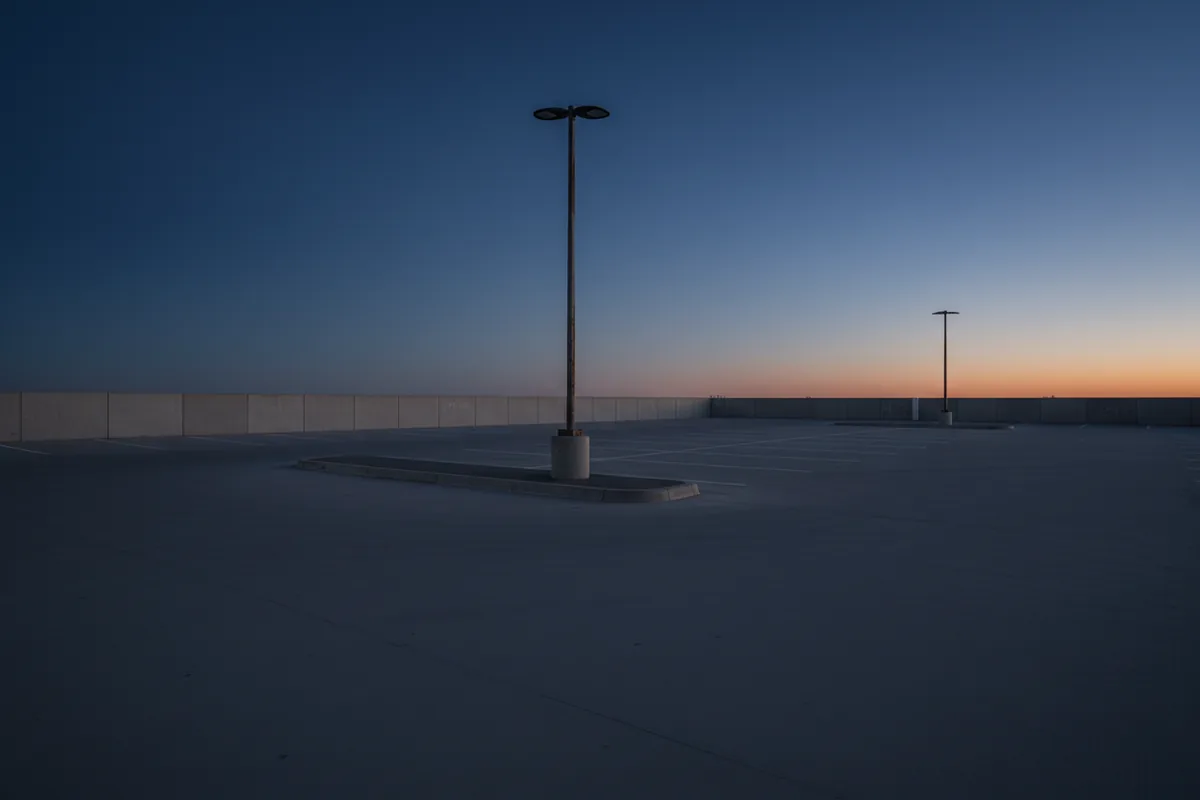
A dark car park at dusk shows an unlit pole relevant to negligent security claims.
Immediate answer

Poor lighting is not a claim by itself. It matters when an attack was foreseeable and better light could have made a difference. Here is how it is documented.

On this page
  1. Whether the Darkness Counts: What Inadequate Lighting Means in a Negligent Security Claim
  2. Whether the Case Can Move Forward at All: When a Property Owner Owes Protection Against Crime
  3. Why the Property's History Matters More Than the Night of the Attack
  4. Where the Attack Happened and Why You Were There: How Location and Visitor Status Shape the Lighting Question
  5. What Lighting Evidence Shows About the Moment of the Attack, and Why Some Records Can Slip Away
  6. What a Claim Has to Show if You Were Hurt in the Dark: How State Law Shapes It
  7. Frequently asked questions
  8. Sources

If you were attacked in a dark parking lot, stairwell or walkway, poor lighting can matter to a claim against the property, but it is not a claim on its own. It matters when the attack was foreseeable, better lighting could have made a difference, and state law treats it as a failure of reasonable care.

Most people facing this question are carrying more than a legal puzzle. You may be recovering from an injury, or you may be a parent or spouse trying to understand how a loved one was hurt or killed in a place that should have been safe. You may remember the burned-out fixture or the shadowed corner and wonder whether that darkness counts for anything. This page explains how the law treats poor lighting where an attack happened, what makes it relevant, and how lighting conditions are usually documented.

Whether the Darkness Counts: What Inadequate Lighting Means in a Negligent Security Claim

Premises liability is the area of law about the responsibility of a person or business that owns or controls property for harm that happens there. Negligent security is one branch of premises liability. It asks whether the party in control of a property failed to take reasonable steps against a foreseeable crime, so that someone was hurt by a third party's criminal act. The person who attacked is still responsible for the attack. A negligent security claim asks a separate question about the property. The broader picture of how a negligent security claim works covers that framework in more detail.

Inadequate lighting fits inside that framework as a condition, not as a cause of action of its own. A dark parking area does not, by itself, make anyone liable. It becomes relevant when it bears on whether the property owner or manager provided reasonable security, given what that party knew or should have known about the risk of crime.

There is no single national lighting standard that settles these questions. This page does not set out any required level of light, because whether lighting was adequate is judged against the facts of the property and the law of the state where the attack happened.

For you, this means the dark corner you remember is a starting point, not an answer. Whether it supports a claim depends on whether the darkness was connected to a security failure the law recognizes, and that is one of the first things a conversation with an attorney can help sort out.

Whether the Case Can Move Forward at All: When a Property Owner Owes Protection Against Crime

If you or a family member was lawfully on the property, such as a tenant, guest or customer, general common-law principles say the person or business controlling it owed you a duty of reasonable care. In many settings, that duty can reach as far as taking reasonable steps against criminal conduct by others, but only in certain circumstances.

What sets those circumstances is foreseeability, meaning whether a reasonable property controller would have anticipated a risk of the kind of harm that happened. Courts treat it as the threshold: whether a duty existed at all comes before whether the lighting was reasonable. If the crime was not foreseeable, the lighting question may never be reached, and the claim may stop there.

Texas offers one example, and it is Texas's rule only. In a 1998 decision, Timberwalk Apartments, Partners, Inc. v. Cain, the Supreme Court of Texas addressed when the duty of one who controls premises to protect against criminal conduct arises. It tied that duty to whether the criminal conduct was foreseeable. That decision governs Texas law. It is not a national standard, and it does not decide how any other state's courts approach the question. Other states define and apply foreseeability in their own ways, and the factors a court weighs, and how much each one counts, depend on the state.

Why the Property's History Matters More Than the Night of the Attack

Once foreseeability is the threshold, the practical question becomes what shows it. A security measure, including lighting, matters legally only if the attack was foreseeable and the measure could have made a difference, and how that applies is a matter of each state's law.

Several kinds of facts commonly come up:

  • Prior criminal incidents at or near the property, such as earlier assaults, robberies or break-ins.
  • Complaints about lighting itself, such as tenants or customers reporting dark areas, broken fixtures or burned-out bulbs.
  • The nature and history of the location: what kind of property it is, how it is used, and what has happened there over time.

These facts can point in different directions. A history of prior crime in a dark area may support foreseeability. A property with no history of crime may lead a court to find the attack was not foreseeable, depending on the state's approach. Whether better lighting could have made a difference is also a fact question. It can depend on where the attacker waited, how the attack unfolded and what a person could have seen.

For a family or an injured person, knowing what had been reported before, and to whom, is part of understanding whether the darkness has legal weight.

Where the Attack Happened and Why You Were There: How Location and Visitor Status Shape the Lighting Question

Poor lighting appears as a factor in negligent security claims at many kinds of property, including parking lots, apartment complexes, hotels, stairwells, parking garages, convenience stores and transit areas. Any property where people walk, park or wait after dark can raise the question.

The type of property can shape what reasonable care looks like. A property where residents come and go at night presents different questions from one that is mostly empty after closing. An apartment complex can raise lighting questions in its own way, as discussed on the page about apartment and residential shootings, and attacks at retail or transit properties raise similar questions, as covered in negligent security assault claims.

Why you were on the property can matter too. Many states sort visitors into categories: an invitee, such as a customer or tenant invited for a business purpose; a licensee, such as a social guest present with permission; and a trespasser, present without permission. In states that use these categories, the duty owed often differs by category, and the categories themselves, and whether a state uses them at all, differ from state to state.

So if you were a tenant, a hotel guest or a shopper when the attack happened, your status at that moment may affect how much care the property owed you.

What Lighting Evidence Shows About the Moment of the Attack, and Why Some Records Can Slip Away

The lighting conditions that matter are the conditions at the time of the attack. What a parking lot looked like the next morning, or after a fixture was replaced, may say little about what someone could see at the moment of the attack. That is why the time and date of the attack anchor most lighting evidence, and why changes made afterward, such as a repaired fixture, can make the original conditions harder to show.

If you were hurt, or if you lost a family member, the records that usually matter include:

  • Photographs and video of the scene, especially any taken at or near the time of the attack and under similar lighting.
  • Maintenance and inspection records for lighting fixtures, showing when lights were checked, repaired or reported out.
  • Prior complaints about lighting, such as written complaints from tenants or customers and work orders for broken fixtures.
  • Incident reports prepared by the property and police reports of the attack.
  • The names and contact information of witnesses who saw the scene or the conditions.
  • Medical records, which form part of the broader record of the harm.

Some of these records are in the hands of the injured person or the family. Others, like maintenance logs and work orders, are usually kept by the property owner or manager, which means the family often does not control whether they are kept. Each kind can help show what the lighting was like, whether anyone knew about problems with it, and when. Reading these records against photographs of the scene can also raise technical questions about light and visibility that go beyond what a layperson can judge alone.

Families often feel unsure which papers count and which do not. If it would help to talk through which documents may bear on what happened at that property, you can request a conversation with our attorney about the records you have and the ones you are still looking for.

What a Claim Has to Show if You Were Hurt in the Dark: How State Law Shapes It

A negligent security claim generally rests on four elements. Duty means the property controller owed the injured person a legal obligation of reasonable care. Breach means the controller failed to meet that obligation. Causation means the failure was a cause of the harm. Damages means real harm resulted, in categories the state's law recognizes. The specific rules for each element differ by state. The page on what a claim has to show walks through each one.

For someone hurt in a dark area, causation is often the hardest step. Showing that the area was dark is not enough. The darkness generally has to be shown to have contributed to the harm, for example by hiding an attacker or keeping you from seeing danger in time. If the poor lighting was merely present and made no difference to what happened, a claim built on it may fail on this element under a state's law.

Your own conduct can also affect what you recover. Many states use comparative fault, which compares the fault of each party and can reduce or, in some states, bar a recovery based on the injured person's own share of fault. A minority of states follow contributory negligence, a stricter rule under which a person found partly at fault may be barred from recovering at all. Which rule applies depends entirely on the state.

Every state also sets a statute of limitations, the time within which a lawsuit must be filed. These periods differ by state and can depend on the type of claim, so this page states no period. A conversation with our attorney can cover the deadline that applies where the attack happened and how the facts you know line up with each element. How a claim can end, from dismissal to verdict, is covered on the page about possible outcomes.

Free case evaluation

No Fee Unless We Win Your Case

A free case evaluation is how it starts. Tell us what happened, and we’ll help you understand your options. You pay no fee unless we win your case.

Negligent Security Claims Authority

How it works

  1. Call us or request a free case evaluationTell us what happened, in your own words.
  2. Talk through your caseYour options, and what your case may be worth.
  3. No fee unless we winYou pay no attorney fee unless we win your case.
Before your next step

A considered next step.

Frequently asked questions

What is a negligent security case?

A negligent security case is a premises liability claim in which a person hurt by someone else's crime argues that the property owner or controller failed to take reasonable steps against foreseeable harm. Lighting is one condition that may be relevant, alongside other security measures. Whether a claim exists depends on the facts and the law of the state where it happened.

What does inadequate lighting mean in a premises liability context?

It refers to lighting on a property that may have been too weak to deter crime or to let people see and avoid danger. No single national standard sets a required level. What matters legally is whether the lighting, given the property's history and circumstances, bore on the owner's duty of reasonable care.

What are the elements of a negligent security claim?

Most states require four things: a duty of care, a breach of that duty, causation linking the breach to the harm, and damages. The specific rules for each element, including what makes criminal conduct foreseeable, differ from state to state.

Does poor lighting alone prove a property owner was negligent?

No. Poor lighting alone does not establish negligence. The lighting generally has to be part of a failure to address a foreseeable risk, and that failure has to have contributed to the harm. Whether those elements are met depends on the facts and the state's law.

What evidence is relevant to a poor lighting negligent security claim?

Relevant evidence often includes photographs and video taken at or near the time of the attack, maintenance and inspection records for lighting fixtures, prior lighting complaints, incident and police reports, and records of prior crime nearby. The time and date matter because the lighting at that moment is what the claim concerns.

How does foreseeability affect a negligent security claim involving lighting?

Foreseeability is the threshold question. A duty to address a security risk, including lighting, generally arises only where criminal conduct was foreseeable. Prior incidents and complaints are common factors. In Texas, the Timberwalk decision ties the duty to foreseeability. That is Texas's rule only, and other states differ.

How long does someone have to file a negligent security claim?

The deadline, called a statute of limitations, differs by state and can depend on the circumstances, so this answer states no period. A conversation with an attorney can identify the deadline that applies to a particular situation.