Property security & civil claims

Broken Locks and Gates as Negligent Security: What the Law Asks

General legal information · Updated November 11, 2026
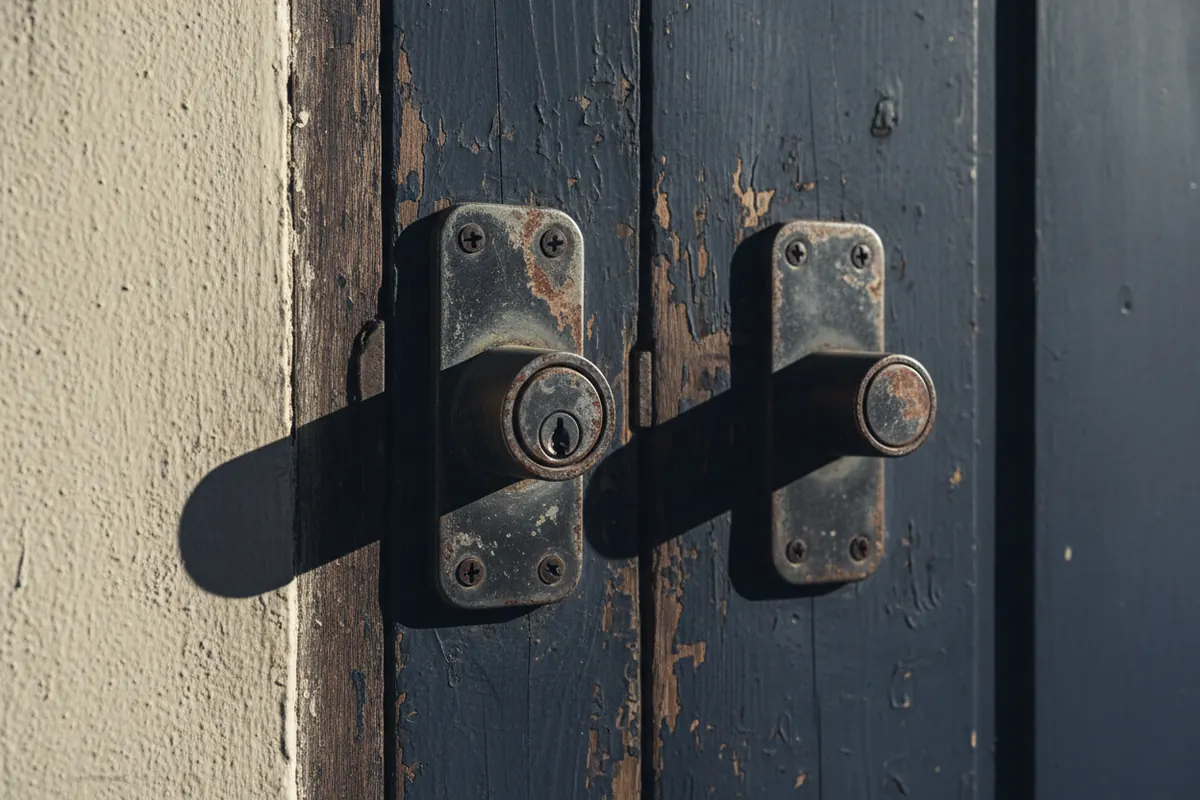
A worn steel deadbolt on a weathered door with a slightly misaligned latch plate visible.
Immediate answer

A broken lock or gate does not prove fault. Learn how control, knowledge and response decide negligent security cases, and what repair records can show.

On this page
  1. When a Broken Lock or Gate Comes Up in a Negligent Security Case
  2. Whether the Property Owner's Duty Covers the Broken Hardware You Noticed
  3. How Courts Decide Whether the Broken Lock Actually Caused the Attack
  4. Where You Were Hurt and Why You Were There
  5. What Repair Records and Complaints Can Show, and What They Cannot
  6. Why Who Controlled the Hardware Decides Who May Be Responsible
  7. Why the State Where You Were Hurt Shapes Every Case
  8. Frequently asked questions
  9. Sources

If an attacker got in through a broken lock, gate or door, the property may be legally responsible, but the broken device alone does not settle that. The law asks who controlled the hardware, what they knew or should have known about the problem, what they did about it, and whether that failure helped cause the harm.

Most people facing this question are carrying something heavy. You may have been hurt in your own apartment, a hotel hallway or a parking garage. You may be a parent whose child was attacked, or a family trying to understand a death. Then you remember the gate that never latched or the lock that had been broken for weeks, and you start to wonder whether it mattered. This page explains how negligent security law treats broken access controls: what the property's duty covers, what courts weigh, what records can and cannot show, and why the state where it happened shapes everything.

When a Broken Lock or Gate Comes Up in a Negligent Security Case

Negligent security is a branch of premises liability, the area of law dealing with a property owner's or manager's duty to keep the property reasonably safe for the people on it. A negligent security claim asks whether that duty covered protection against a crime committed by someone else, and whether the property failed to meet it. A broader overview appears on our page about the work of a negligent security lawyer.

Access controls are the physical and electronic means of keeping out people who do not belong: locks, latches, bolting devices, door viewers, gates, and key-card or key systems. When one of these is broken, missing or left disabled, a door that should stop an intruder may not.

A broken device does not show fault by itself. Locks wear out and gates get damaged. A property can have a broken latch and still have acted reasonably, for example if nobody knew of the problem and there had been no reasonable chance to find it. The analysis turns on three questions:

  • Control: who was responsible for the hardware.
  • Knowledge: what was known, or should have been known, about its condition.
  • Response: what the property did about it.

For an injured person or a grieving family, the stakes come down to whether the broken lock or gate can be connected to the property's legal responsibility for the crime that followed. What a person already knows, such as who handled repairs, whether the problem was reported and how long it lasted, often maps directly onto these three questions.

Whether the Property Owner's Duty Covers the Broken Hardware You Noticed

Courts, rather than legislatures, built most of this duty. Under that common law, a property owner or manager generally owes the people on the property a duty to use reasonable care to maintain reasonably safe conditions. Depending on the facts, that can include security hardware.

How far the duty reaches depends heavily on who controls the property. An owner who keeps control of entry gates, common-area doors and key systems is in a different position from an owner who has handed a space over entirely to someone else.

Some legislatures have written specific hardware requirements into statute. Texas is one example, and its rule is Texas's alone. For residential rentals, section 92.153 of the Texas Property Code states that, except as other subsections of the section provide and "without necessity of request by the tenant, a dwelling must be equipped with" a list of devices, including:

"(1) a window latch on each exterior window of the dwelling; (2) a doorknob lock or keyed dead bolt on each exterior door; (3) a sliding door pin lock on each exterior sliding glass door of the dwelling; […] (5) a keyless bolting device and a door viewer on each exterior door of the dwelling."

The same section adds that "a security device required by this section must be operable throughout the time a tenant is in possession of a dwelling," with a stated exception allowing a landlord to deactivate or remove a doorknob lock's locking mechanism, or a device that is not a keyless bolting device, where a keyed dead bolt has been installed on the same door. Texas's subchapter also states that its landlord duties and tenant remedies are in lieu of common law, other statutory law and most local ordinances relating to a residential landlord's duty to install, change, rekey, repair or replace security devices, subject to an exception for certain earlier municipal ordinances.

Other states set different rules, and some have no hardware statute at all. Where a statute like Texas's exists, a landlord's failure to provide or keep working the listed devices can be relevant to whether the duty was met. It does not, by itself, establish liability; causation and damages still have to be shown, and whether they are depends on the facts.

For someone hurt at home or on another property, the first question is whether the hardware that failed was within the duty of the party in control. Which device failed, who was responsible for it, and whether the state has a hardware statute are all points an attorney can help sort out.


How Courts Decide Whether the Broken Lock Actually Caused the Attack

A negligent security claim typically requires four elements:

  • Duty: the property owed the injured person some obligation of care.
  • Breach: the property fell short of that obligation.
  • Causation: the shortfall was actually a cause of the harm.
  • Damages: real loss resulted, such as injuries, medical expenses or lost work.

Our page on negligent security requirements explains each in more depth.

Causation is often the hardest. The broken hardware has to have been a cause of what happened, not merely present at the scene. A lock that was broken on a door the attacker never used tells a different story from a gate that was propped open on the exact path the attacker took. In practical terms, this is often where a claim either holds together or falls apart: if the broken device cannot be linked to how the attacker got in, the injured person may not be able to recover for medical bills, lost work or other losses from the property, even if the property knew the device was broken.

Courts also ask about foreseeability: whether criminal activity at that property was the kind of risk the party in control could reasonably have anticipated. A broken gate at a property with no reason to anticipate crime may be weighed differently from the same gate at a property where trouble was already known.

In Texas, the leading example is Timberwalk Apartments, Partners, Inc. v. Cain, 972 S.W.2d 749, a 1998 decision of the Supreme Court of Texas. It addresses the duty of a landlord that retains control over security and how the foreseeability of criminal conduct is analyzed. That is Texas's rule only; other states apply their own standards, some stricter and some looser.

Useful questions to bring to a conversation with an attorney include how the attacker got in, whether that route passed the broken device, and whether there were earlier incidents or complaints at the property.

Where You Were Hurt and Why You Were There

Broken access controls come up across many kinds of property:

Property typeHardware often involved
Apartment complexesEntry gates, building doors, unit locks
HotelsRoom locks, key cards, side entrances
Parking garagesPedestrian doors, vehicle gates
Retail centersService doors, back corridors
Office buildingsLobby access systems
Storage facilitiesKeypad gates, perimeter fencing

The setting shapes which party is likely to hold control and what kind of record exists. At an apartment complex, a tenant's unit lock and the complex's entry gate may fall under different responsibilities; at a hotel, key-card systems usually leave the guest little control at all. Residential settings have their own considerations, covered on our page about apartment complex negligent security.

Why you were on the property also matters. A tenant who lives there, a hotel guest, a customer shopping in a store and a business invitee, meaning someone on the property for a purpose connected to the owner's business, may each stand in a different legal position. In many states, that relationship affects the level of care the property owed, so the same broken gate can carry different weight depending on who was hurt.

How the relationship changes the duty is a question of state law, and a national page cannot say which category controls in a given state. Our page on who can bring a claim explains the people who may be able to bring one, including families after a death. The type of property and the reason for being there are two of the first facts an attorney would likely ask about.

What Repair Records and Complaints Can Show, and What They Cannot

Records often carry the weight of these cases. The categories that usually matter include maintenance logs, repair requests and work orders, prior complaints about the same hardware, incident reports, inspection records, and prior crime reports at the property. Injured people and families often also keep their own photos of the broken device, texts or emails reporting the problem, medical records, police reports and the names of witnesses.

These records can show knowledge. A repair request for the same gate, filed weeks earlier, may show that the property knew the hardware was broken. Repeated complaints, or inspections that noted the problem, may support constructive knowledge, a legal term meaning the property should have known even if no one admits it actually did. Prior crime reports can bear on foreseeability.

Records cannot carry a claim alone. A repair log does not, by itself, show that the broken device caused the attack, and a complaint does not, by itself, show that the response was unreasonable. A work order marked closed might reflect a real repair or a failed one, and an empty file might mean nothing was reported or that records were not kept.

If you reported a broken lock and later were hurt, it can feel as though the report alone should decide things. In the law, it is one piece: important evidence about knowledge, which then has to be connected to response and causation.

Why Who Controlled the Hardware Decides Who May Be Responsible

A property owner or manager is generally responsible for hardware it controls. When someone else controlled it, the analysis shifts, sometimes toward that other party and sometimes away from the property altogether.

Several parties may hold control at a single property: the owner, a property management company running daily operations, and a third-party maintenance contractor hired to repair gates or service access systems. A tenant may also control some hardware, such as a lock the tenant installed.

Leases, management contracts and maintenance agreements often define who was responsible for which hardware, and courts examine these documents. Texas's statute illustrates the point in its own terms: it gives a management company or managing agent that is not the owner, and has not claimed to be in the lease, a defense to certain tenant remedies under stated conditions, including that it did not have the owner's funds to comply. That is Texas's rule, and other states handle the question differently.

The practical stakes are direct. A claim brought against a party that did not control the broken hardware may fail even when the hardware was plainly broken, while identifying the right party can determine whether anyone is responsible for the injured person's losses. A conversation about which party held the keys, the contracts and the repair duty can be arranged through a case evaluation request, and it can cover the documents and dates involved.

Why the State Where You Were Hurt Shapes Every Case

Negligent security is governed mainly by state law, and no single state's rule applies everywhere. The state where the injury happened generally decides which rules apply, which means the same broken gate can lead to different results in different states.

A statute of limitations is the deadline by which a lawsuit must be filed. Each state sets its own, with its own starting point and exceptions, and the period differs by state and sometimes by the type of claim. This page states no deadline because none applies nationwide.

If you share any responsibility for what happened, state fault rules decide what that means. Under comparative fault, responsibility is divided among the parties, sometimes including the injured person, and what may be recovered is adjusted accordingly. Under contributory fault, an older, stricter rule kept in some form by a small number of jurisdictions, an injured person's own fault can bar recovery. States also differ in how they treat a criminal attacker's share of fault alongside the property's. A related page explains how a civil inadequate security lawsuit works alongside these rules.

For families after a death, wrongful death is the claim brought by surviving family members, or a representative, when a person is killed by another's wrongful act or neglect. Who may bring it, the damages categories the law may allow, and its deadline all vary by state.

Hardware rules vary too. Some states, as Texas has for residential rentals, have written security-device requirements into statute; others rely on common-law duty analysis alone. Because the deadline, the fault rules and the hardware rules all depend on location, the state where the injury occurred is one of the first facts to confirm, and which state's rules apply is a question an attorney can help answer.

Free case evaluation

No Fee Unless We Win Your Case

A free case evaluation is how it starts. Tell us what happened, and we’ll help you understand your options. You pay no fee unless we win your case.

Negligent Security Claims Authority

How it works

  1. Call us or request a free case evaluationTell us what happened, in your own words.
  2. Talk through your caseYour options, and what your case may be worth.
  3. No fee unless we winYou pay no attorney fee unless we win your case.
Before your next step

A considered next step.

Frequently asked questions

Does a broken lock prove that a property owner was negligent?

No. A broken lock does not establish negligence on its own. The law asks whether the owner controlled the hardware, knew or should have known it was broken, failed to respond reasonably, and whether that failure caused the harm. Duty, breach, causation and damages must all be shown; the broken device is evidence, not proof of fault.

What kinds of hardware are typically covered in a broken-access-control negligent security claim?

Locks, latches, bolting devices, door viewers, gates, and key-card or key systems are the hardware most commonly at issue. Which hardware matters in a given case depends on what the property controlled, what was broken, and how that connects to the harm.

What records are usually relevant when a broken lock or gate is involved?

Records that typically matter include maintenance logs, repair requests, prior complaints about the same hardware, incident reports, inspection records, and prior crime reports at the property. They can show what the owner knew or should have known. They do not by themselves establish causation or that the response was unreasonable.

Can a tenant bring a negligent security claim against a landlord for a broken lock?

That depends on state law, the lease and who controlled the hardware. Texas, for example, lists security devices a residential rental must have without a tenant's request in section 92.153 of its Property Code. Whether a failure produces liability still depends on causation and the other elements. Rules differ by state.

How does foreseeability affect a negligent security claim involving broken access controls?

Courts generally ask whether criminal activity at the property was foreseeable, based on prior incidents, complaints or conditions, before finding a duty to guard against it. A broken lock or gate tends to matter more where crime there was foreseeable. The standard varies by state.

Does it matter who owned the property versus who managed it?

Yes. Control is a threshold question: the party responsible for maintaining the broken hardware, whether the owner, a management company or a contractor, is the party whose duty is at issue. Leases, management contracts and maintenance agreements often define that responsibility, and identifying the controlling party is fact-specific.

Do negligent security rules differ from state to state?

Yes. Statutes of limitations, comparative or contributory fault rules, damages rules and wrongful-death rules all differ by state. Some states have written security-hardware requirements for certain property types; others rely on common-law duty analysis. The state where the injury occurred generally determines which rules apply.