Property security & civil claims

Property Owner Responsibility for Crime: What the Law Asks and What It Means for You

General legal information · Updated November 11, 2026
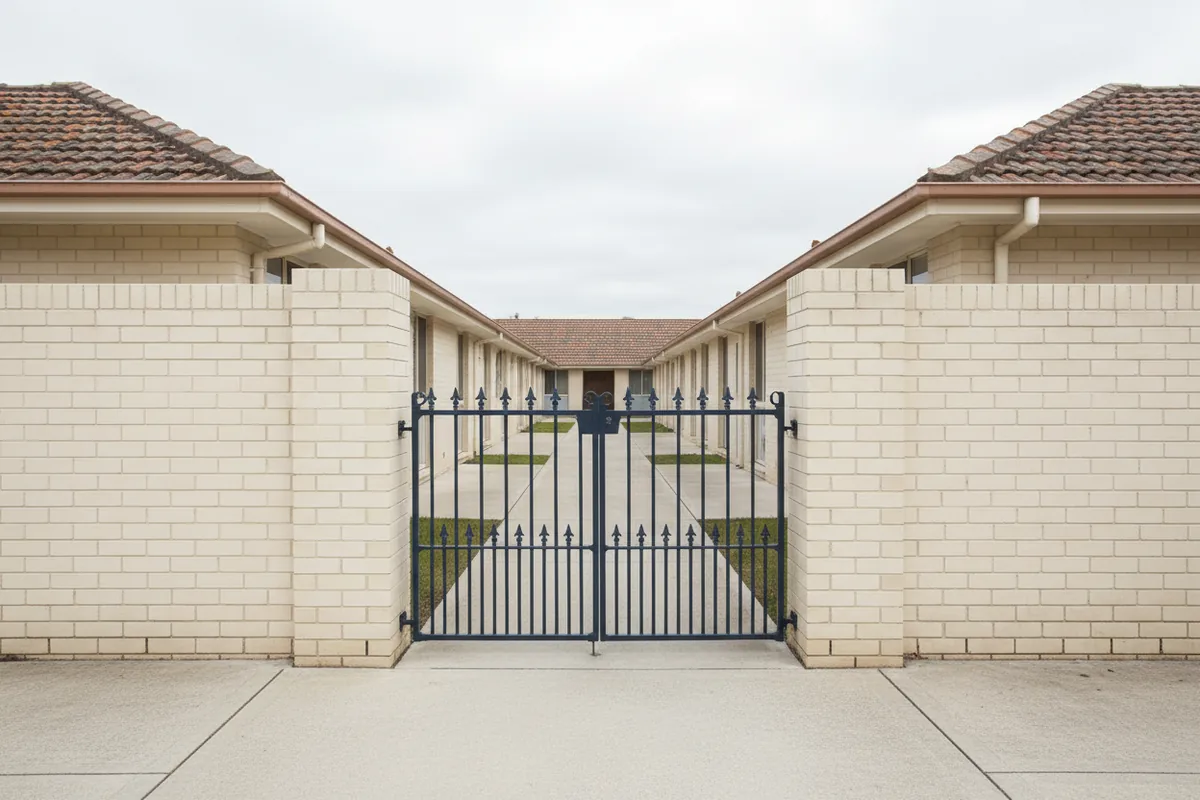
A closed iron gate at a residential rental complex entrance on a calm morning.
Immediate answer

A property owner may share civil responsibility for a crime on its premises when it controlled the space, the crime was foreseeable and reasonable care fell short.

On this page
  1. When a Crime Happens on Someone Else's Property: What Premises Liability Means for You
  2. Control, Knowledge, and Reasonable Care: The Three Questions Courts Ask About Your Claim
  3. Whether Earlier Crimes Made Yours Foreseeable: What Prior Incidents Can Show
  4. Who Controls the Property Where You Were Hurt — and Why That Shapes Responsibility
  5. Whether the Security in Place Was Enough: What 'Reasonable Care' Looks Like
  6. When an Attacker and a Property Owner Both Played a Role: How Responsibility Is Shared
  7. Deadlines, Damages, and How Your State's Law Shapes Each Case
  8. Frequently asked questions
  9. Sources

If you were hurt in a crime on someone else's property, the owner or manager may share civil responsibility, but only in some situations. Courts generally ask three things: whether the owner controlled the place where it happened, whether a crime like it was foreseeable, and whether the owner failed to take reasonable care against that risk.

Most people facing this question are dealing with something no one plans for: an assault in an apartment parking lot, a robbery in a hotel hallway, or a call telling a family that someone they love was badly hurt or killed. The person who did it is the obvious wrongdoer, and that can make it feel strange to ask about the property at all. Yet the question of whether the owner did what the law asks is a separate one, and it often decides whether a civil claim exists alongside the criminal case. This page explains how that question works in negligent security cases, and why the answer depends so heavily on the state where it happened.

When a Crime Happens on Someone Else's Property: What Premises Liability Means for You

If you were hurt on property someone else controls, premises liability is the legal duty that person or business owed you as someone who came onto it. Most of us think of it in terms of hazards like broken stairs, but it also reaches a different kind of danger: harm from another person.

Negligent security is the branch of premises liability that asks whether the owner or manager provided reasonable security measures against crime on the property. It does not ask whether the owner committed the crime. It asks whether the owner's own conduct, measured against what the law expected of it, fell short and contributed to the harm.

This is a civil question, not a criminal one. The government pursues the attacker in a prosecution. The injured person or the family raises the property owner's responsibility in a civil lawsuit. Both can exist at the same time, and one does not wait on or depend on the other in any simple way. A criminal case may end in a conviction, a plea or no arrest at all, and the civil question about the property still stands on its own facts.

For an injured person or a family, this means the outcome of the criminal case does not settle whether the property owner can be held responsible. State law governs most of these cases: what an owner owes, how courts test foreseeability, how fault is shared and what deadlines apply all differ, and no single national rule decides every case. A useful early question is which state's law applies, since the rest of the analysis is built on it.

Control, Knowledge, and Reasonable Care: The Three Questions Courts Ask About Your Claim

The legal analysis usually breaks down into three questions, and a claim generally needs all of them answered in the injured person's favor. The overview of negligent security requirements walks through the same elements in more depth.

The first is control. Did the person or company being asked about actually control the space where the crime happened, such as the parking lot, the lobby or the building entrance?

The second is knowledge, which the law calls foreseeability: whether a reasonable owner in that position would have anticipated that a crime of this type could occur. An owner is not expected to predict every crime. It is expected to respond to risks it knew about or should have known about.

The third is reasonable care. Given the risk the owner faced, did it take the steps a reasonable owner would have taken?

Some states treat the threshold question of whether any duty existed as one for the judge rather than the jury. In a 1998 decision of the Supreme Court of Texas, Timberwalk Apartments, Partners, Inc. v. Cain, the court held that whether a duty exists is a question of law for the court. That is Texas's rule. Other states may frame the duty question differently, may weigh other factors, or may give the jury a larger role. In practical terms, if a court decides no duty existed, the case can end before anyone hears what happened. That is why the three questions—who ran the space, what had happened there before, and what security was in place—are usually where an attorney conversation starts.

Whether Earlier Crimes Made Yours Foreseeable: What Prior Incidents Can Show

Earlier crimes are usually the strongest evidence of what an owner knew or should have known. A single past incident may say little. A pattern of similar crimes can say a great deal.

Courts commonly look at four features of prior incidents: how often they happened (frequency), how recently (recency), how much they resemble the crime at issue (similarity), and how close they were to the property (proximity). The Timberwalk decision sets out this framework as Texas's approach to whether a crime was foreseeable to a landlord. Other states use their own tests, and some weigh these factors differently or add others.

Whether crime near the property counts, and not only crime on it, also varies. In some approaches, a run of robberies at the neighboring property bears on what the owner should have expected. In others, the focus stays closer to the premises themselves. The page on prior crimes and foreseeability explains how earlier incidents are used.

This question can decide the whole claim: if the crime was not foreseeable, the owner may have owed no duty to guard against it. The records that usually bear on it include police reports of earlier incidents at or near the property, the property's own incident logs, and prior complaints from tenants, guests or customers. These records can be hard for an injured person to see from the outside, which is part of why foreseeability is so often disputed.

Who Controls the Property Where You Were Hurt — and Why That Shapes Responsibility

Responsibility generally follows control. The duty usually runs to whoever controls the part of the property where the harm happened, which is not always the person whose name is on the deed.

The spaces where this question tends to arise include common areas, parking lots and garages, lobbies, hallways and stairwells, gates and entrances, and shared amenities. These are examples, not a complete list. In each one, the question is who decided how the space was lit, locked, watched and maintained.

The Timberwalk decision, as Texas's rule, describes the duty of one who controls premises and applies it to a landlord that retains control over security and safety. Under that approach, a landlord that keeps control over security in common areas may owe a duty there even though tenants occupy their own units. Other states may draw the line between landlord and tenant control in different places.

Ownership and management are often split. A property may be owned by one entity, run by a management company, and patrolled by a security contractor. Depending on the facts and the state's law, more than one of them may bear some responsibility. The same principles apply when a customer is attacked at a business, where the operator's control over the parking lot or entrance becomes the focus. None of this means any particular owner, manager or contractor was at fault. Still, identifying every company connected to the property—owner, manager, security contractor—is often among the first factual questions in a case.

Whether the Security in Place Was Enough: What 'Reasonable Care' Looks Like

Reasonable care is not a checklist. It is measured against the risk the owner knew or should have known about, so what is reasonable at a property with a history of armed robberies may differ from what is reasonable at one with no history at all.

The kinds of measures courts commonly examine include lighting, locks and access controls, gates, fencing or barriers, security personnel, and surveillance cameras. These are examples, not a full list, and no one measure is required everywhere.

The absence of a measure is not automatically a breach. A property without a guard, for example, has not necessarily failed in its duty; the question is whether a reasonable owner facing the same known risks would have provided one. The page on missing security personnel covers that question in more detail. The same reasoning applies to a broken gate, a dark stairwell or a camera that was not recording.

This is often where a case turns: the gap between what was actually in place and what a reasonable owner would have provided in light of the risk. That gap is rarely obvious from the scene alone. It usually depends on what the owner knew, what it had been told, and what it did or did not do in response.

When an Attacker and a Property Owner Both Played a Role: How Responsibility Is Shared

For a crime victim, the central point is this: in comparative fault systems, the attacker's criminal responsibility does not automatically erase a property owner's civil share. Instead, responsibility is assigned in percentages among the parties whose conduct contributed to the harm, and those percentages can shape what any recovery looks like. This system is called comparative fault or, in some states, proportionate responsibility.

Texas's version is one example, and it shows how the percentages work in practice. Chapter 33 of the Texas Civil Practice and Remedies Code applies to tort cases, with listed exceptions, including a claim for exemplary damages.

How percentages are assigned. Under section 33.003, the factfinder gives a whole-number percentage to you as the claimant, to each defendant, to each settling person, and to each responsible third party designated under section 33.004.

When the attacker is unknown. Section 33.004 lets a defendant ask the court to designate a responsible third party. Subsection (j) allows a defendant, within 60 days after filing its original answer, to allege that an unknown person committed a criminal act that caused the injury; the court then grants designation of that "John Doe" or "Jane Doe" if the statute's pleading conditions are met. Put simply, an unidentified attacker can still be assigned a share of fault. Under section 33.004(i), that designation or a finding of fault against that person does not by itself impose liability on that person.

What each percentage means. Section 33.001 of the Texas Civil Practice and Remedies Code provides: "In an action to which this chapter applies, a claimant may not recover damages if his percentage of responsibility is greater than 50 percent." Under section 33.012(a), a claimant not barred by section 33.001 has damages reduced by the claimant's own percentage. Under section 33.013, a liable defendant is generally liable only for its own percentage, unless its percentage is greater than 50 percent or another listed exception applies.

All of this is Texas's rule. Other states use different frameworks, and some apply contributory fault rules that can bar recovery in ways that work differently from comparative fault. How the percentages fall depends on the evidence, which is why two questions often matter early: how the state divides fault, and how an unknown or unidentified attacker is treated.


Deadlines, Damages, and How Your State's Law Shapes Each Case

A statute of limitations is a law that sets the deadline by which a civil lawsuit must be filed. Limitation periods for premises liability and negligent security claims differ from state to state, as do the rules for when the period starts and what can pause it. Missing the deadline can bar a claim entirely.

The kinds of losses the law may allow also depend on the state and the facts. Categories commonly at issue include medical expenses, lost income, and pain and suffering. When a person dies, surviving family members may bring a wrongful death claim, which is a civil claim brought by surviving family when a person dies as a result of another's negligence; who may bring it, and what it covers, is set by each state's law. Some states limit certain categories, and Texas's proportionate responsibility chapter, for instance, does not apply to a claim for exemplary damages. None of this says what any person may recover.

Because deadlines, fault rules and damages rules all turn on which state's law applies, many families find it useful to learn early which state's rules govern their situation. A conversation with our attorney can cover which state's law may apply and which deadlines may be relevant; you can request a case evaluation to talk it through. The page on next steps after an attack describes the records and dates people often gather.

Free case evaluation

No Fee Unless We Win Your Case

A free case evaluation is how it starts. Tell us what happened, and we’ll help you understand your options. You pay no fee unless we win your case.

Negligent Security Claims Authority

How it works

  1. Call us or request a free case evaluationTell us what happened, in your own words.
  2. Talk through your caseYour options, and what your case may be worth.
  3. No fee unless we winYou pay no attorney fee unless we win your case.
Before your next step

A considered next step.

Frequently asked questions

Under what conditions can a landlord become liable for a crime committed against a tenant?

A landlord may be responsible when it controlled the area where the crime happened, the crime was foreseeable based on earlier incidents, and it failed to take reasonable security measures against that risk. All three conditions usually must be met. Each state sets its own rules for how they are tested.

Does the attacker's criminal responsibility eliminate the property owner's civil responsibility?

Not necessarily. In states that use comparative or proportionate fault, responsibility can be divided in percentages among several parties, including the attacker and the property owner. How fault is allocated, and what follows from each percentage, differs by state.

What does 'foreseeability' mean in a negligent security case?

It means whether a reasonable owner in that position would have anticipated that a crime of this type could occur. Courts often look at the frequency, recency, similarity and proximity of earlier crimes at or near the property. It is central to whether a duty existed.

What kinds of property are covered by negligent security law?

Claims can arise on many properties where an owner or manager controls access and security, including apartment complexes, hotels, parking lots and shopping centers. The key questions are who controlled the space and what security was in place. State law sets the specific rules.

What is the difference between a property owner's civil responsibility and the attacker's criminal responsibility?

The government pursues the attacker's criminal responsibility, which can lead to punishment. The owner's civil responsibility is something you or your family can raise in a civil lawsuit, asking whether the owner's failure to provide reasonable security contributed to the harm. Both can exist at once, under different standards.

How does state law affect a negligent security claim?

State law governs most of these cases. What an owner owes, how foreseeability is tested, how fault is shared, what damages are available and how long a person has to file all differ from state to state. No single national rule applies everywhere.

What records often matter in a property owner responsibility case?

Records that often bear on these cases include police reports of earlier incidents at or near the property, the property's incident logs, prior complaints from tenants or guests, and documentation of the security in place at the time. How they affect a case depends on the facts and the state.