

Property security & civil claims

Negligent Security Evidence: What It Is and Why Preserving It Matters

General legal information · Updated November 11, 2026
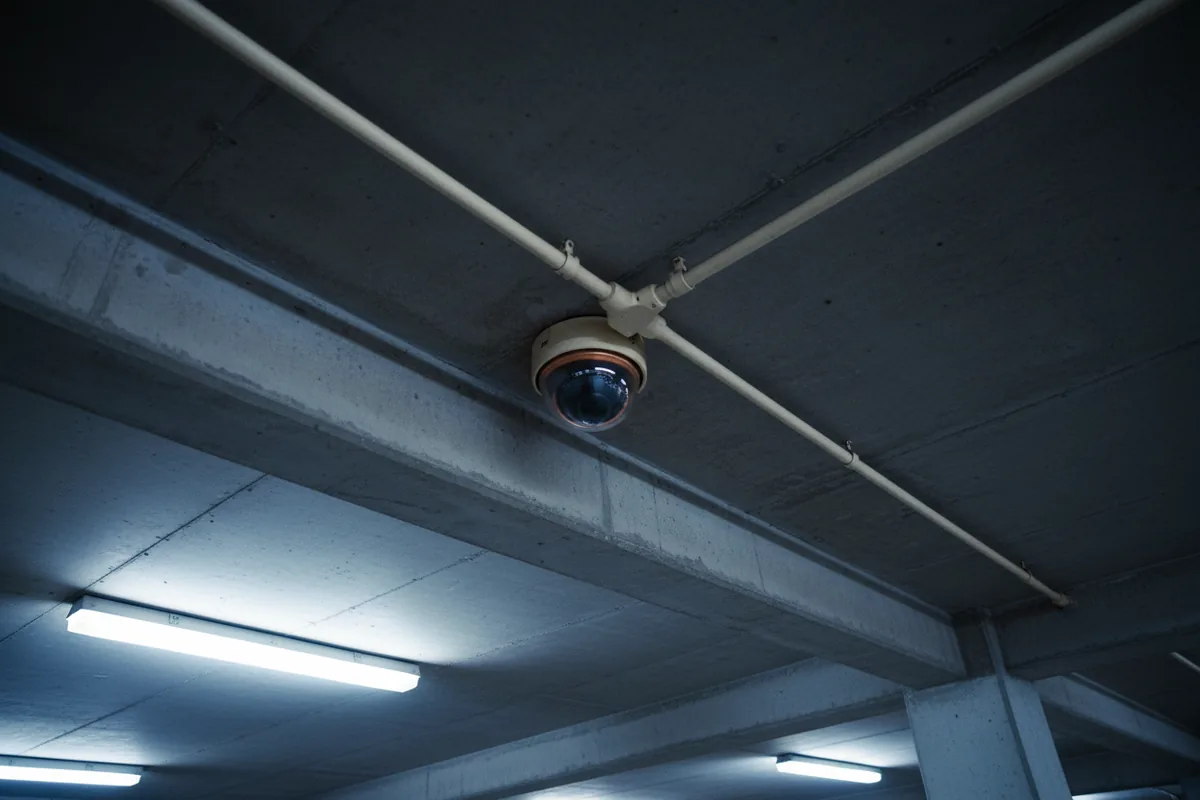
A dome security camera mounted on a bare concrete parking garage ceiling.
Immediate answer

Negligent security evidence: camera video, incident reports, guard logs and access records, why they can be overwritten, and how Rule 37(e) treats lost data.

On this page
  1. Why the Evidence of What Happened to You Is Usually Not in Your Hands
  2. Which Records Support Each of the Four Elements of Your Claim
  3. Which Types of Evidence May Matter in Your Negligent Security Case
  4. Why the Video That Could Show What Happened May Already Be Disappearing
  5. If Electronic Evidence Was Lost: What Federal Court Rules Say
  6. When Evidence Is Already Gone: How State Spoliation Rules Differ
  7. What a Written Preservation Request Does and Does Not Decide
  8. Frequently asked questions
  9. Sources

If you were attacked at an apartment, hotel, parking lot or other property, the evidence in a negligent security case is mostly the property's own records. These include camera video, incident reports, guard logs, access-card data and records of earlier crimes. Some of these records are digital and can be overwritten. A written preservation request asks the holder to keep them.

Most people facing this question are still recovering from an assault, a shooting or a robbery, or are a family trying to understand how a loved one died. Often they have just learned that the cameras that may have captured what happened belong to someone else. They are trying to work out what records exist, who holds them, and whether anything can be done before those records are gone. This page explains that evidence, the reasons it can disappear, and how federal and state courts treat evidence that is lost.

Why the Evidence of What Happened to You Is Usually Not in Your Hands

Negligent security is a premises liability theory. If you were hurt on someone else's property, premises liability is the area of law that looks at whether unsafe conditions there caused the injury. Under negligent security, the question is whether the property owner or occupier may be held responsible because inadequate security measures allowed a foreseeable criminal act to harm you. The person who committed the crime is a separate party. The claim looks at the property's own conduct.

The evidence in these cases usually falls into two broad groups. The first shows what security the property had or lacked: cameras, guards, locks, gates, lighting and the records of how they worked. The second shows what the property knew about earlier criminal activity, such as prior incident reports, complaints and police calls.

Neither group is usually in the injured person's hands. Medical records follow the patient. Security evidence stays with the property owner, a management company, a security contractor or a government agency. For many families, these records are the only objective account of what the property knew, what protection was in place and what happened in the minutes that mattered. The account of your own incident may sit entirely with the other side.

State law governs negligent security claims. Each state's courts and statutes define the elements a claimant must show, which are duty, breach, causation and damages, and how those elements apply varies from state to state. Which records matter most depends on the kind of property involved, whether it is an apartment complex, a hotel or a store parking lot. For an overview, see the page on what negligent security cases involve.

Which Records Support Each of the Four Elements of Your Claim

A negligent security claim generally has to show four elements, and each one points to a different kind of evidence.

Duty is the first element. Property owners and occupiers generally owe a duty of reasonable care to people lawfully on the property. Whether that duty extends to protecting people against crimes committed by others depends on state law and on how foreseeable the harm was. Foreseeability means whether the harm was reasonably predictable. Courts in many states ask whether earlier criminal incidents on or near the property made an attack foreseeable. That is why prior incident reports and crime records can carry so much weight: they bear on what the owner knew or should have known.

Breach is the second element. The question is whether the security you encountered fell below what a reasonably prudent property owner would have provided under the circumstances. In practice, that comes down to whether the cameras worked, whether guards were posted and whether locks and lighting were maintained.

Causation is the third element. It asks whether the security failure was a proximate cause of the harm, meaning that adequate security would have prevented the criminal act or reduced the risk of it. Video and patrol records often bear on this question.

Damages is the fourth element. It covers the harm that resulted. The categories the law may allow vary by state and may include medical expenses, lost income and pain and suffering. In a death case, each state's wrongful-death statute defines additional categories.

Whether any of these elements is met depends on the facts; an injury does not, by itself, establish any of them. The practical consequence is that each lost record can leave a specific element with less support: missing prior incident reports weaken the showing on duty, and erased video can weaken causation. One question worth weighing is which element in your situation rests most on a single record, and who holds it. The inadequate security lawsuit page walks through the elements in more depth.

Which Types of Evidence May Matter in Your Negligent Security Case

Each kind of record tells a different part of the story, and each is often held by a different party.

Surveillance video can show the incident itself, the layout of the property and the lighting conditions, and whether security staff were present and responded. The property owner or a security contractor typically holds it.

Incident reports are written records made by property staff or security personnel at the time of the event. They may record what was seen, who responded and what was done.

Security guard logs and patrol records can show whether guards were on duty, where they were posted and whether scheduled patrols actually happened.

Access control records are the electronic logs from key cards, fobs or gates. They can show who entered or left a secured area and when.

Maintenance and inspection records can show whether lighting, locks, fencing, cameras and other security equipment were working and kept in repair.

Prior incident reports and crime reports describe earlier criminal activity on or near the property and bear on foreseeability. The property, a security contractor or a law enforcement agency may hold them.

Witness information includes the names and contact details of people who saw the incident, or who can describe the property's security before it happened.

A shooting in an apartment parking area may turn on gate logs and lighting records. A stabbing at a property may turn more on guard patrols and video. Because each record is held by a different party, knowing what exists and who has it is often the first practical question, and a record nobody asks about may simply be lost. The page on apartment complex negligent security looks at the records specific to rental housing.

Why the Video That Could Show What Happened May Already Be Disappearing

Many surveillance systems record on a loop, which means newer footage automatically overwrites older footage. How long a system keeps video before overwriting it varies by system and by property. No single period applies everywhere.

Other digital records can be erased the same way. Electronic access logs, guard scheduling software and similar systems may delete or archive their data on their own schedules. Once records are overwritten or deleted, they typically cannot be recovered. For someone whose case may depend on what a camera saw, the footage may cease to exist through routine operation, without anyone ever deciding to destroy it.

A written preservation request is the usual way to put the holder on notice. It is sometimes called a litigation hold letter or a spoliation letter. Spoliation is the legal term for destroying, altering or failing to keep evidence. The request tells the property owner, and any security contractor or other party who may hold relevant records, that litigation is anticipated and that the records must be retained.

An effective request typically identifies the date, time and location of the incident. It describes the categories of records to keep, such as video from named areas, incident reports, guard logs and access data, specifically enough that the recipient knows what to hold. A request reaches the records only if they still exist when it arrives.

If Electronic Evidence Was Lost: What Federal Court Rules Say

The federal court rule on lost digital records is Rule 37(e) of the Federal Rules of Civil Procedure. It applies only in federal court.

Rule 37(e) covers electronically stored information, a term for digital data such as video files, logs and emails. The rule applies when such information that should have been preserved in the anticipation or conduct of litigation is lost because a party failed to take reasonable steps to preserve it, and the information cannot be restored or replaced through additional discovery. Discovery is the stage of a lawsuit in which each side obtains records and testimony from the other.

When those conditions are met, the rule sets out two levels of response. If the loss causes prejudice to another party, the court may order measures no greater than necessary to cure the prejudice. Only upon finding that the party acted with intent to deprive another party of the information may the court go further. In that case, it may presume the information was unfavorable to the party that lost it, instruct the jury that it may or must presume so, or dismiss the action or enter a default judgment.

For an injured person, the line between carelessness and intent matters: missing video does not by itself lead to the strongest consequences, which a federal court reaches only after finding intent to deprive.

When Evidence Is Already Gone: How State Spoliation Rules Differ

State courts are not bound by Rule 37(e). Each state has built its own framework, through court decisions, statutes or court rules, for handling evidence that is destroyed or lost.

Some states recognize a separate cause of action for spoliation of evidence, which is a claim brought on its own against whoever destroyed it. Other states address spoliation only inside the underlying case, through sanctions such as an adverse inference instruction or dismissal. An adverse inference instruction tells the jury it may assume the lost evidence would have hurt the side that lost it.

If evidence in your case went missing, several answers depend on your state: when the property's duty to preserve evidence first arose, what conduct can lead to sanctions and what remedies a court may order. Limitation periods, fault rules and damages rules differ from state to state as well, so no one state's approach is the rule everywhere.

Because negligent security claims arise under state law, the state where the incident occurred generally governs both the claim and the rules about evidence preservation. For a family who has learned that video was already erased, the consequence is concrete: that state's approach can decide whether the loss becomes its own claim, a jury instruction or nothing at all. A question worth asking next is which of those remedies the incident state recognizes. If you would like to talk through a situation like this, you can request a case evaluation.

What a Written Preservation Request Does and Does Not Decide

A preservation request creates a written record that the property owner was told litigation was anticipated and that specific evidence had to be kept. That record can matter later, when a court considers whether a duty to preserve existed and when it began.

The request is not always the starting point of that duty. Whether the owner had a duty to preserve before receiving any letter is a question courts address under the applicable federal or state rule. The incident itself, for example, may have put the owner on notice.

A request also leaves several things open. It does not promise that the records exist. Footage may have been overwritten before the letter arrived, or a camera may never have been working. Production of the records in discovery is not assured, and no particular outcome follows from sending one. The outcomes page describes the ways a claim can end.

The content of the request affects how well it works: which records it names, how specifically it describes them and whom it is addressed to. A letter sent only to an owner may not reach a separate security vendor that runs the cameras. A consultation can cover which records to name for a particular property, who is likely to hold each one, and how the request is directed.

Free case evaluation

No Fee Unless We Win Your Case

A free case evaluation is how it starts. Tell us what happened, and we’ll help you understand your options. You pay no fee unless we win your case.

Negligent Security Claims Authority

How it works

  1. Call us or request a free case evaluationTell us what happened, in your own words.
  2. Talk through your caseYour options, and what your case may be worth.
  3. No fee unless we winYou pay no attorney fee unless we win your case.
Before your next step

A considered next step.

Frequently asked questions

What evidence is needed to prove a negligent security claim?

The evidence has to bear on duty, breach, causation and damages. The usual records include surveillance video, incident reports, guard logs, access control data and prior crime reports, and which of them matter depends on the type of property and the facts of the incident. Whether the elements are met depends on those facts.

How long do property owners keep surveillance video?

No single period applies. Many surveillance systems record on a loop and overwrite older footage automatically, and how long a system keeps video varies by system and property. A written preservation request puts the owner on notice to retain the footage, but only footage that still exists when the request arrives can be kept.

What is a spoliation letter in a negligent security case?

It is a written notice, also called a preservation request or litigation hold letter, telling the property owner and other record holders that litigation is anticipated. It identifies the records to keep and creates a written record that the recipient was on notice. Its timing and specificity affect whether it is effective.

What happens if a property owner destroys surveillance video after an incident?

In federal court, Rule 37(e) allows measures to cure the prejudice when information that should have been preserved was lost through a failure to take reasonable steps and cannot be replaced. Only on a finding of intent to deprive may the court presume the information was unfavorable, instruct the jury, or dismiss the action. State courts apply their own rules.

Does Rule 37(e) apply to state court negligent security cases?

No. Rule 37(e) of the Federal Rules of Civil Procedure governs federal court proceedings. In state court, the state's own spoliation rules apply. Those rules differ from the federal rule and from each other on when a duty to preserve arises and what remedies are available.

Who holds the evidence in a negligent security case?

Usually the property owner, a property management company, a security contractor or a government agency holds it, not the injured person. Video and access records generally sit with the property or its security vendor. Police reports and prior crime reports may be held by law enforcement.

What does foreseeability mean in a negligent security case?

Foreseeability asks whether earlier crimes on or near the property made a similar harm reasonably predictable. Courts in many states use it to define the scope of an owner's duty. Prior incident reports, police reports and area crime records bear on what the owner knew or should have known.

Can a negligent security case be brought if the attacker is never identified?

The attacker's identity is a separate question from the property's conduct. The claim focuses on what security existed, whether it was adequate and whether its absence was a proximate cause of the harm. Whether a claim can go forward without identifying the attacker depends on the facts and on the applicable state law.